
Planungskonkurrenz RegioMove Karlsruhe
Ausgangslage
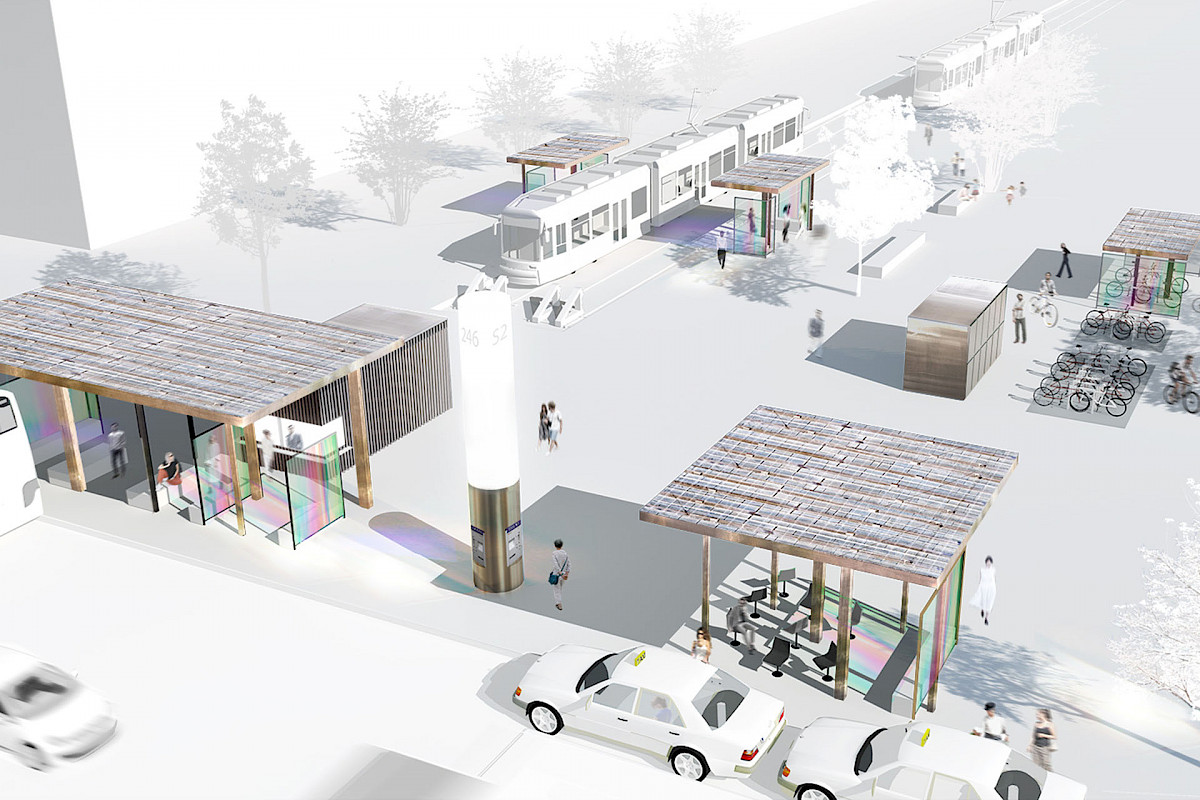
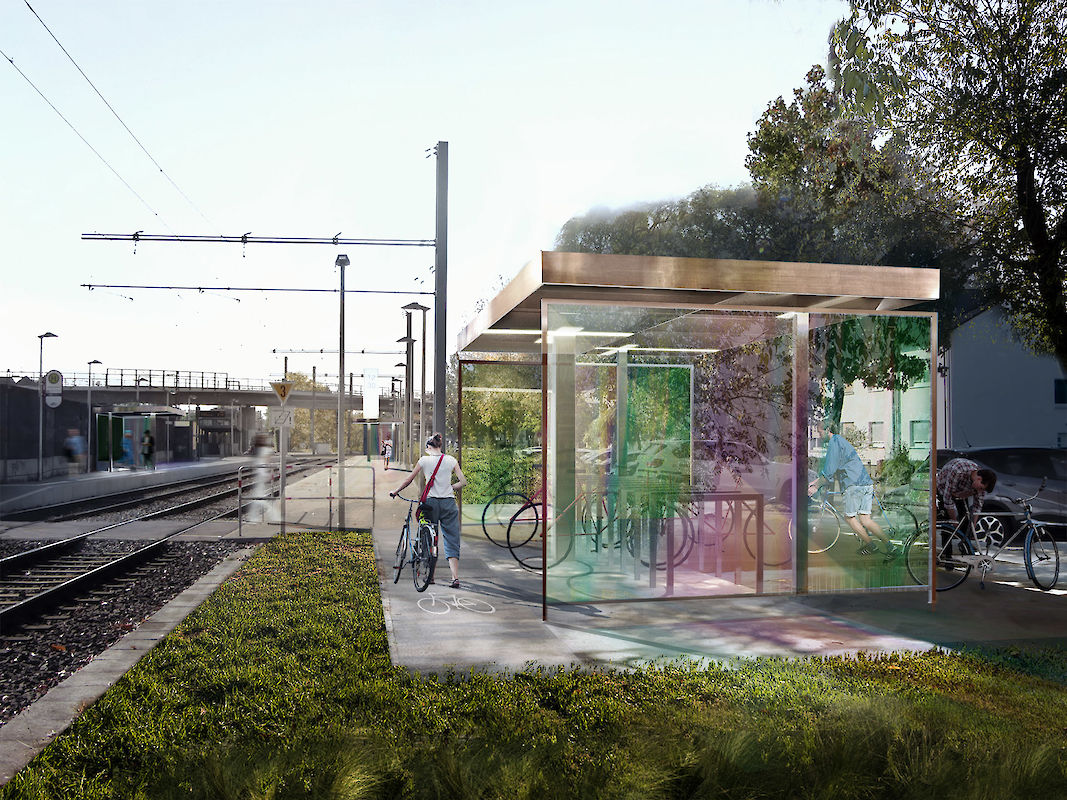
Die Planungskonkurrenz regiomove Karlsruhe adressiert die Entwicklung eines multimodalen Nahverkehrssystems, das bestehende Mobilitätsangebote wie Bus und Bahn mit Car-Sharing und Leihradangeboten vernetzt. Zentrale Elemente sind Mobilitätsstationen, sogenannte Ports, die den einfachen Wechsel zwischen Verkehrsmitteln ermöglichen und zugleich funktionale Anforderungen wie Fahrradabstellanlagen und Taxistände sowie eine stadträumliche Qualität erfüllen.
Konzept
Das Konzept der Planungskonkurrenz regiomove Karlsruhe basiert auf einem modularen Baukastenprinzip für die Ausbildung der Ports. Unter Verwendung industrieller Massenprodukte wird eine wirtschaftliche und flexibel skalierbare Infrastruktur entwickelt. Die Ports können je nach Standort um Service- und Dienstleistungsangebote ergänzt werden und vereinen funktionale Anforderungen mit einer klaren stadträumlichen Präsenz.
Architektur Beschreibung
Die architektonische Ausformulierung der Ports im Rahmen der Planungskonkurrenz regiomove Karlsruhe umfasst unterschiedlich dimensionierte Dachmodule vom Unterstand bis zur großformatigen Wartehalle. Ergänzt werden diese durch Möblierungselemente, Wind- und Wetterschutzwände sowie Landmark-Stelen. Die Gestaltung ermöglicht vielfältige Nutzungen und erzeugt durch transparente Materialien und dezente Farbfolien eine differenzierte räumliche und visuelle Wirkung.
Konstruktion
Die Konstruktion der Ports basiert auf einem modularen System aus V2A-Stahl mit Haupt- und Nebenraster sowie frei positionierbaren Stützen. Dachmodule aus elektropoliertem Stahlblech und Gitterrost gewährleisten Witterungsschutz und Langlebigkeit. VSG-Verglasungen mit integrierten Farbfolien dienen als Windschutz und erzeugen ein variables Licht- und Farbspiel. Ergänzend unterstützen LED-basierte Lichtkonzepte sowie robuste Materialien die Funktionalität, Orientierung und Dauerhaftigkeit der Infrastruktur.
Initial Situation
The planning competition regiomove Karlsruhe addresses the development of a multimodal public transport system that connects existing mobility services such as bus and rail with car-sharing and bike-sharing. Central elements are mobility stations, known as ports, which enable easy transfer between different modes of transport while also accommodating functional requirements such as bicycle parking and taxi stands, as well as providing a distinct urban spatial quality.
Concept
The concept for the planning competition regiomove Karlsruhe is based on a modular system for the design of the ports. Using industrial mass-produced components, an economical and highly flexible infrastructure is developed. Depending on their location, the ports can be expanded with service and commercial functions, combining functional requirements with a clear urban presence.
Architectural Description
The architectural design of the ports within the regiomove Karlsruhe competition includes roof modules of varying sizes, ranging from small shelters to large-scale waiting halls. These are complemented by furniture elements, wind and weather protection walls, and landmark steles. The design allows for diverse uses and creates a differentiated spatial and visual effect through transparent materials and subtle color films.
Construction
The construction of the ports is based on a modular system of stainless steel (V2A) with primary and secondary grids and freely positioned supports. Roof modules made of electropolished steel sheets and grating ensure weather protection and durability. Laminated safety glass (VSG) with integrated color films functions as wind protection and generates varying light and color effects. LED-based lighting concepts and robust materials further support functionality, orientation, and long-term resilience of the infrastructure.
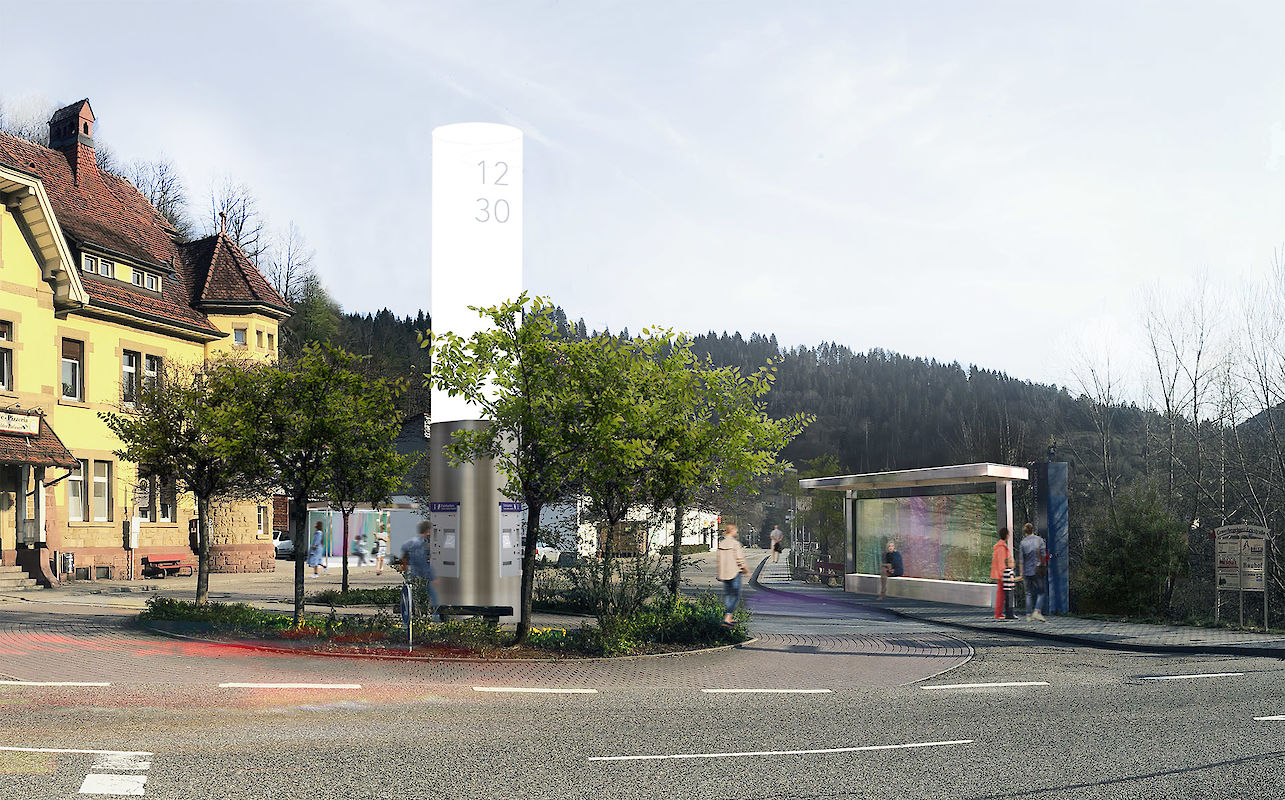
Perspektive Forbach
![Perspektive Hagsfeld]()
Perspektive Hagsfeld
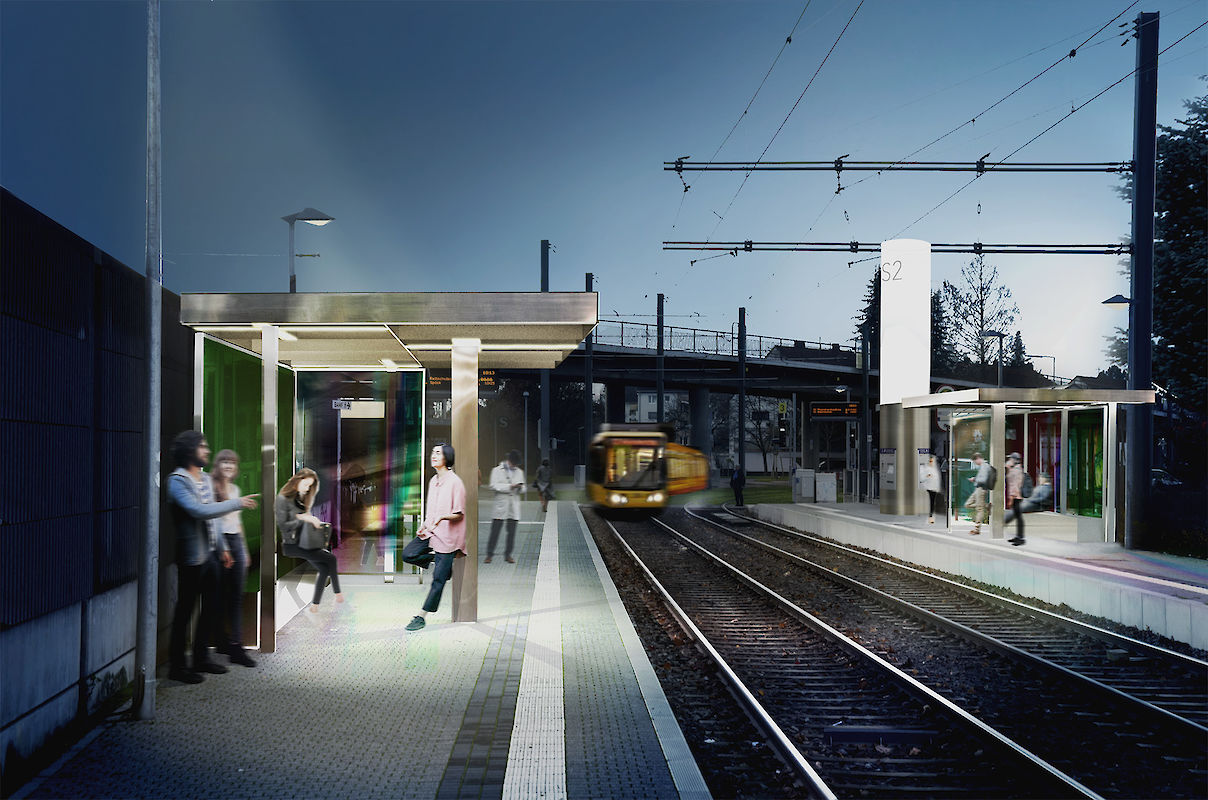
Perspektive Hagsfeld Nacht
Wettbewerbe
| 2019 | Shortlist / ÖPVN Mobilität - Wettbewerb |