
Kirchturm St. Albertus Mainz
Ausgangslage
Der bestehende Kirchturm der katholischen Hochschulgemeinde St. Albertus in Mainz, errichtet zu Beginn der 1960er Jahre, gilt als städtebauliche Landmarke in der Nähe der Johannes-Gutenberg-Universität. Durch den Ausbau der Mainzelbahn gewinnt seine Orientierung für Studierende und Autofahrer zusätzliches Gewicht. Der baufällige Turm kann nicht wirtschaftlich saniert werden, sodass ein Neubau erforderlich ist, der sowohl als Glockenturm für die drei Bestandsglocken als auch als markante städtebauliche Landmarke dient.
Konzept
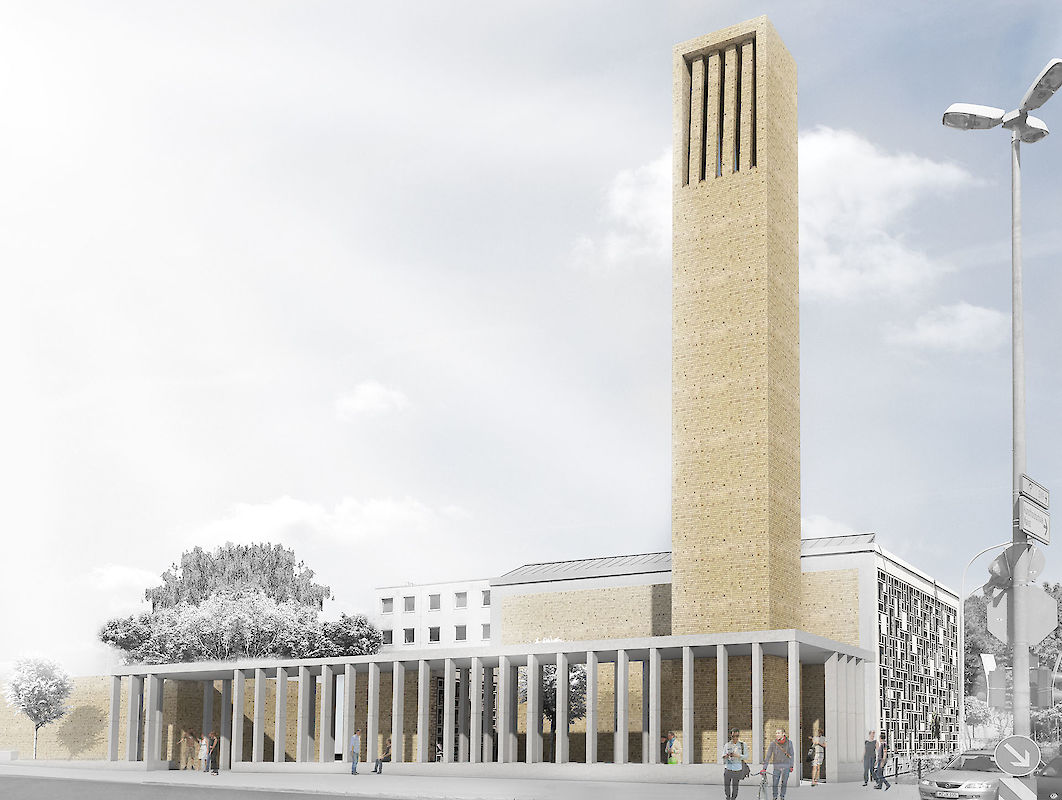
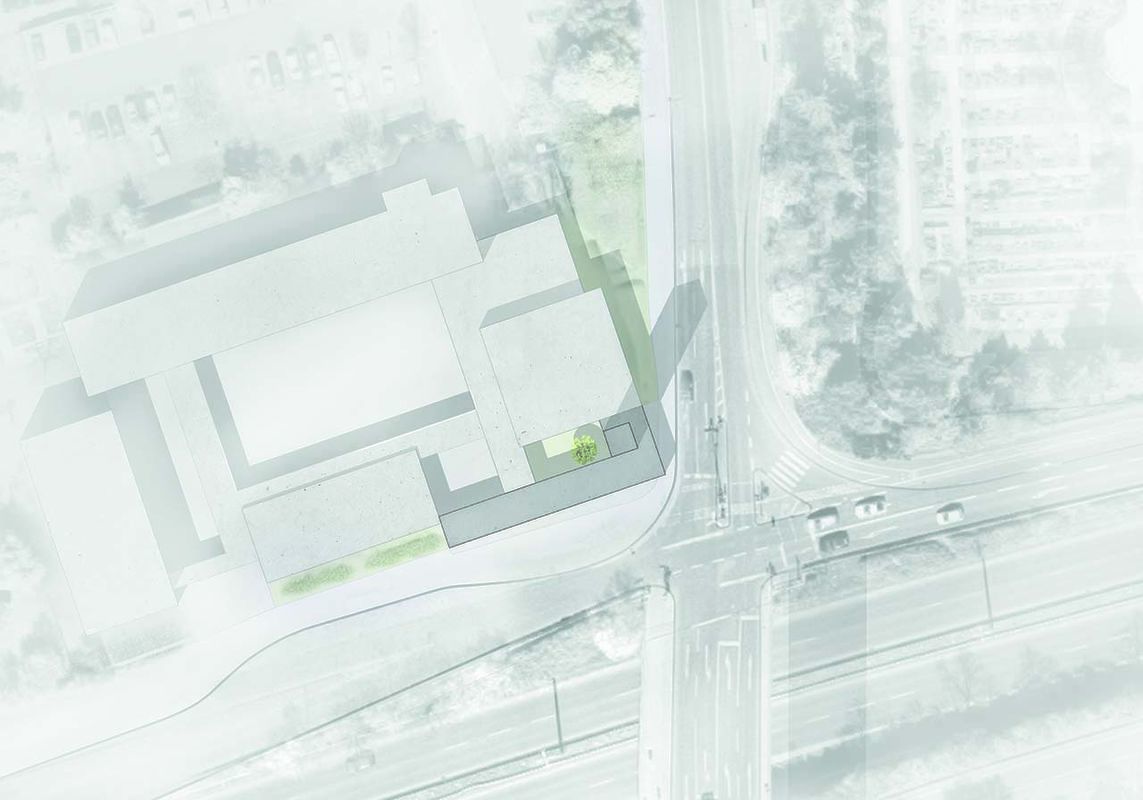
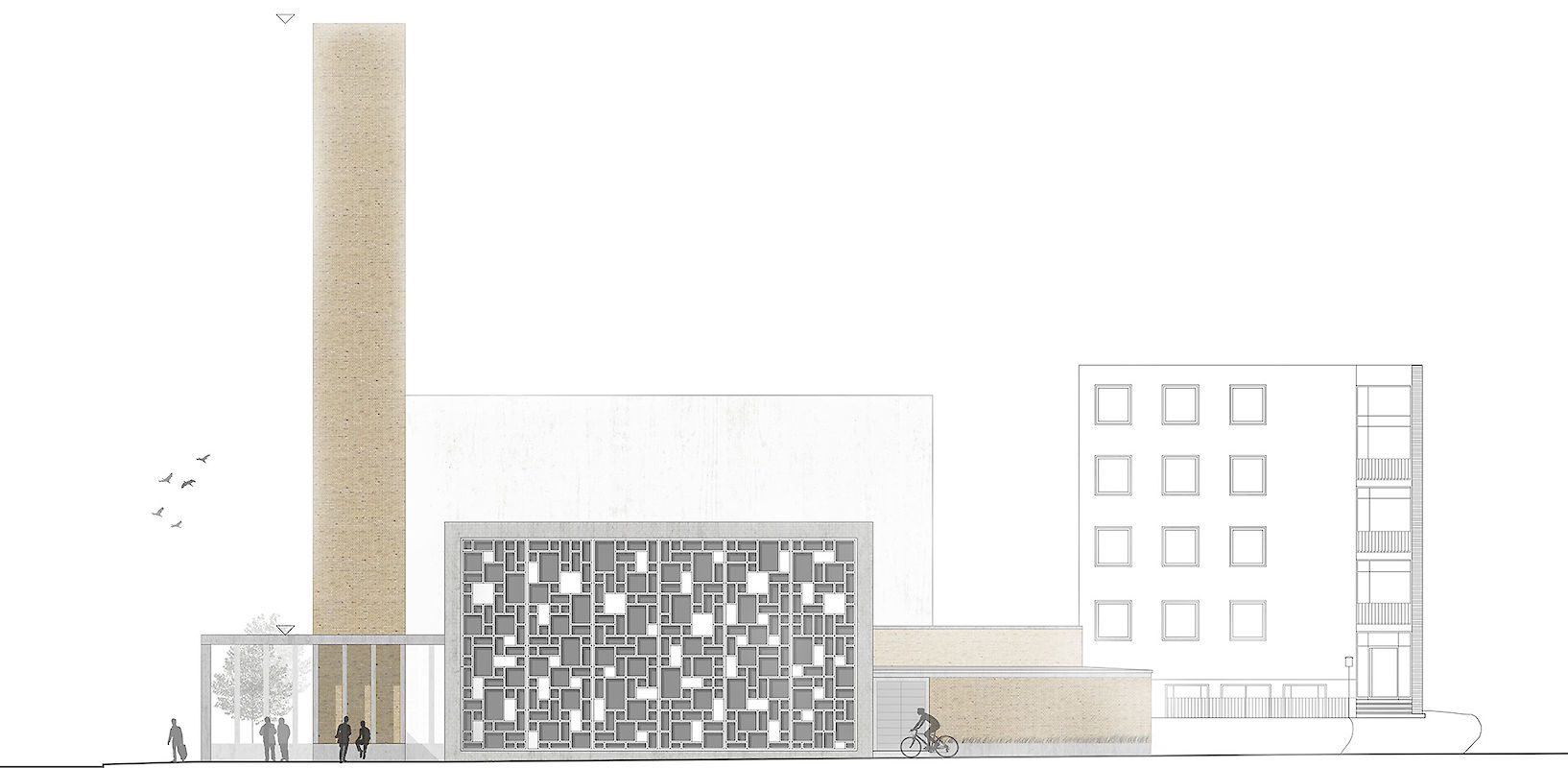
Der Entwurf des Neubaus sieht eine leichte Neuplatzierung des Kirchturms Richtung Doktor-Martin-Luther-King-Weg vor. Dadurch entsteht Raum für eine neue Pergola, die die Eingangssituation des Ensembles aus Kirche, Pfarrräumen, Studentenwohnheim und Kinderkrippe aufwertet und einen intimen Innenhof als Ort der Ruhe schafft. Ziel ist ein zeitgemäßer Neubau, der die Funktion als städtebauliche Landmarke und symbolträchtiger Kirchturm in Mainz fortführt.
Architektur Beschreibung
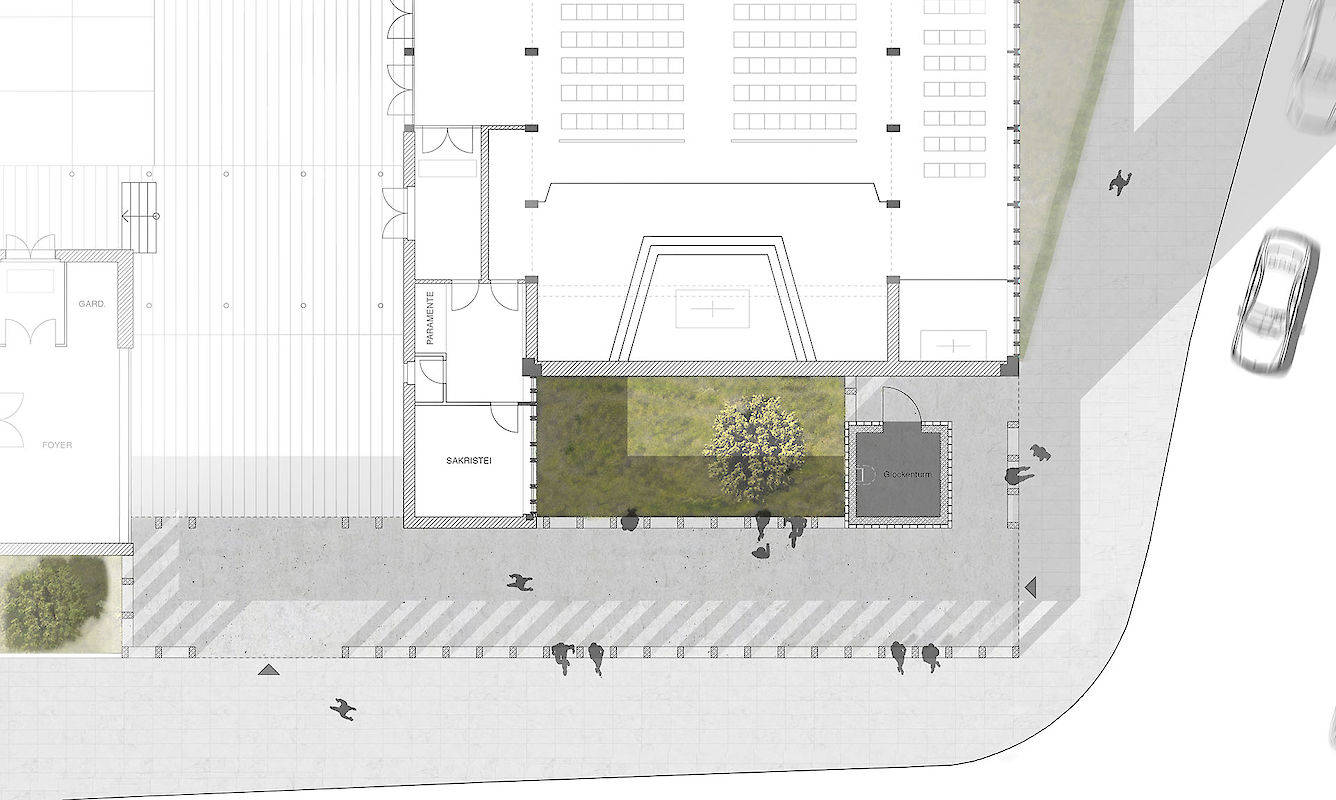
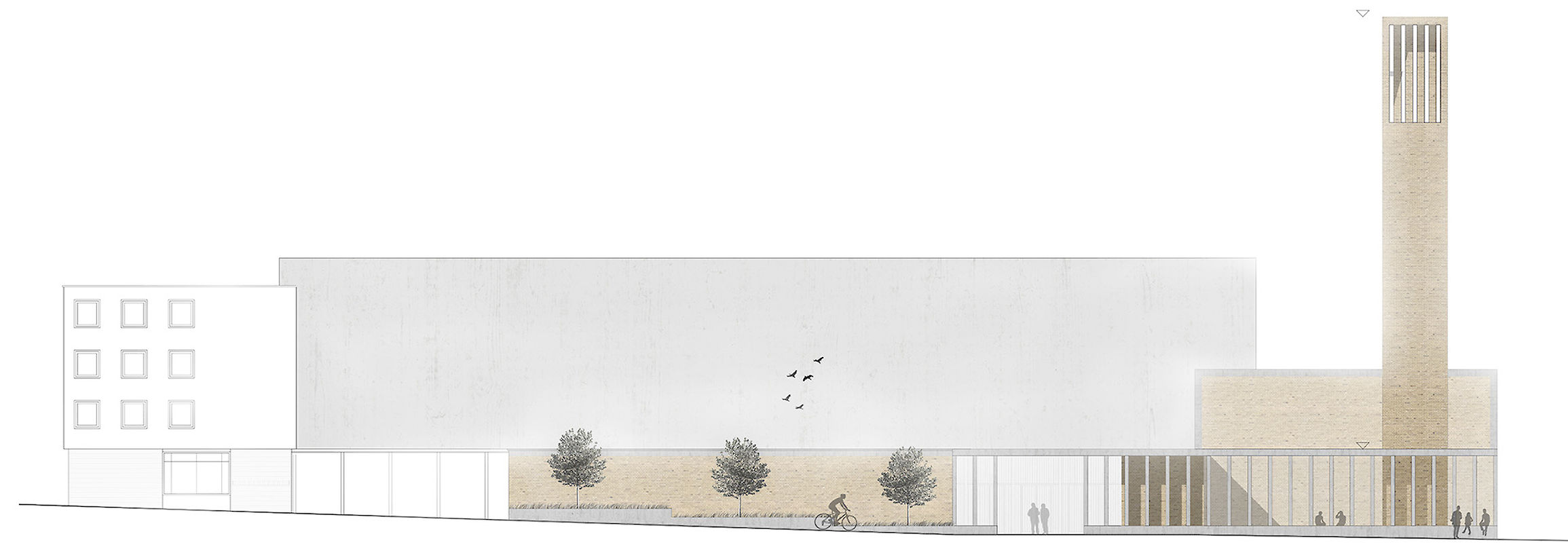
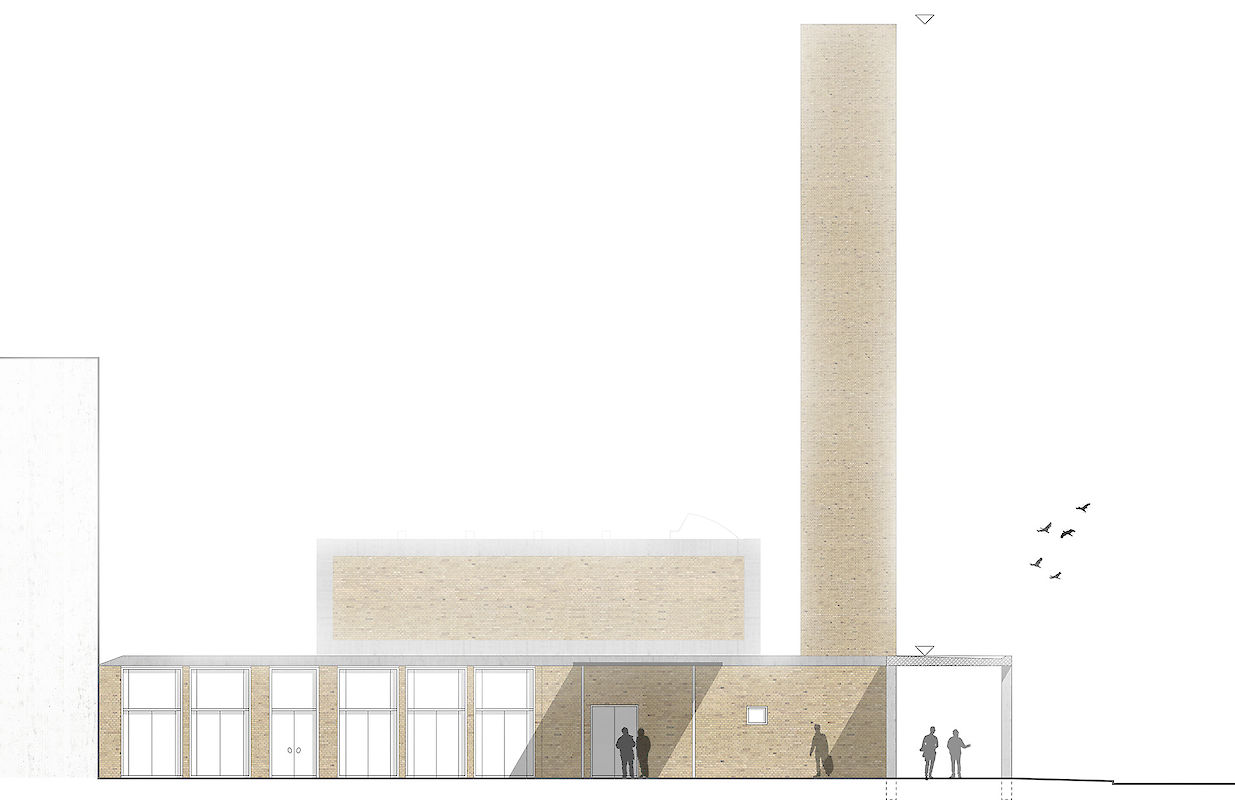
Der quadratische Kirchturm mit den Maßen 3,49 × 3,49 m erreicht eine Höhe von knapp 27,70 m. Durch die Verschiebung wird die Eingangssituation neu gefasst und der Innenhof vor der Sakristei betont. Die Pergola ergänzt den Neubau, verbindet die Baukörper vertikal und schafft eine klare Formensprache. Sowohl Turm als auch Pergola folgen einer reduzierten Gestalt und vermitteln zeitlose Eleganz.
Konstruktion
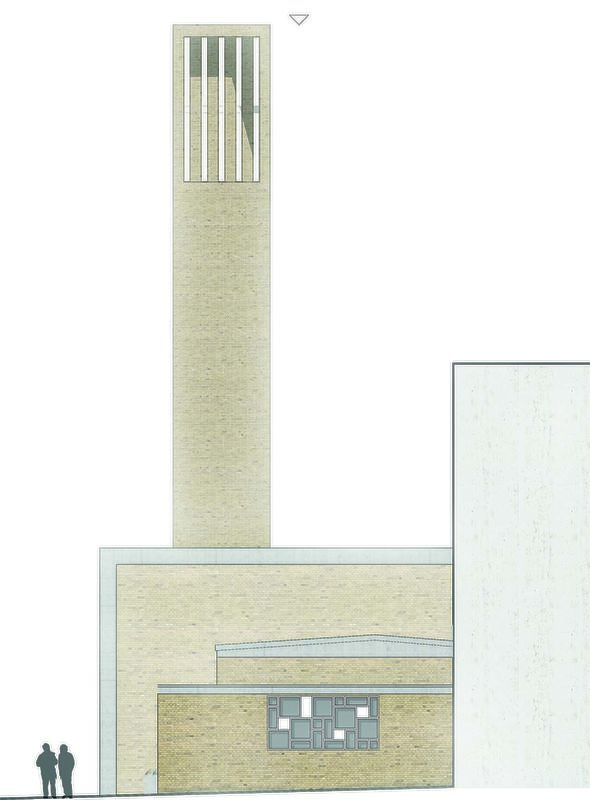
Der Turm besteht aus 3 m hohen Betonfertigteilschachtelementen, werkseitig mit Klinker im Stil der Bestandsgebäude verkleidet. Die Glockenstube auf 19,65 m Höhe besitzt zwei Schallfenster mit geneigten Pfosten und Schalllamellen für optimale Schalllenkung und -dämpfung. Der Innenraum bleibt in Rohmaterialien aus Beton und Ziegel. Die Pergola wird ebenfalls aus Betonfertigteilen errichtet, jedoch als Sichtbeton belassen, mit vertikal ausgerichteten Pfosten im Achsabstand von 90 cm. Wartungsöffnungen ermöglichen das Heben und Senken der Glocken.
Initial Situation
The existing church tower of the St. Albertus Catholic University Parish in Mainz, built in the early 1960s, serves as an urban landmark near the Johannes Gutenberg University. With the expansion of the Mainzelbahn, its orientation for students and drivers has gained additional importance. The deteriorated tower can no longer be economically renovated, making a new construction necessary, which must function both as a bell tower for the three existing bells and as a prominent urban landmark.
Concept
The design proposes a slight repositioning of the tower towards Doktor-Martin-Luther-King-Weg. This creates space for a new pergola, enhancing the entrance of the ensemble, which includes the church, parish rooms, student residence, and daycare, while forming an intimate courtyard for reflection and tranquility. The aim is a contemporary new construction that maintains its role as a symbolic and urban landmark in Mainz.
Architectural Description
The square church tower measures 3.49 × 3.49 m and reaches a height of approximately 27.70 m. The repositioning emphasizes the entrance and the courtyard in front of the sacristy. The pergola complements the tower, linking the building elements vertically and creating a clear architectural language. Both tower and pergola feature a reduced form, expressing timeless elegance.
Construction
The tower is composed of 3 m high precast concrete shaft elements, factory-clad with clinker matching the style of the existing buildings. The bell chamber at 19.65 m features two sound windows with inclined posts and sound louvres to ensure optimal sound direction and attenuation. The interior remains in raw concrete and brick. The pergola is also constructed of precast concrete but left as exposed concrete, with vertical posts spaced 90 cm apart. Maintenance openings allow the bells to be raised and lowered.
Wettbewerbe
| 2015 | Shortlist / Kirchenbau - Wettbewerb Shortlist |