
Goethetunnel Mainz
Ausgangslage
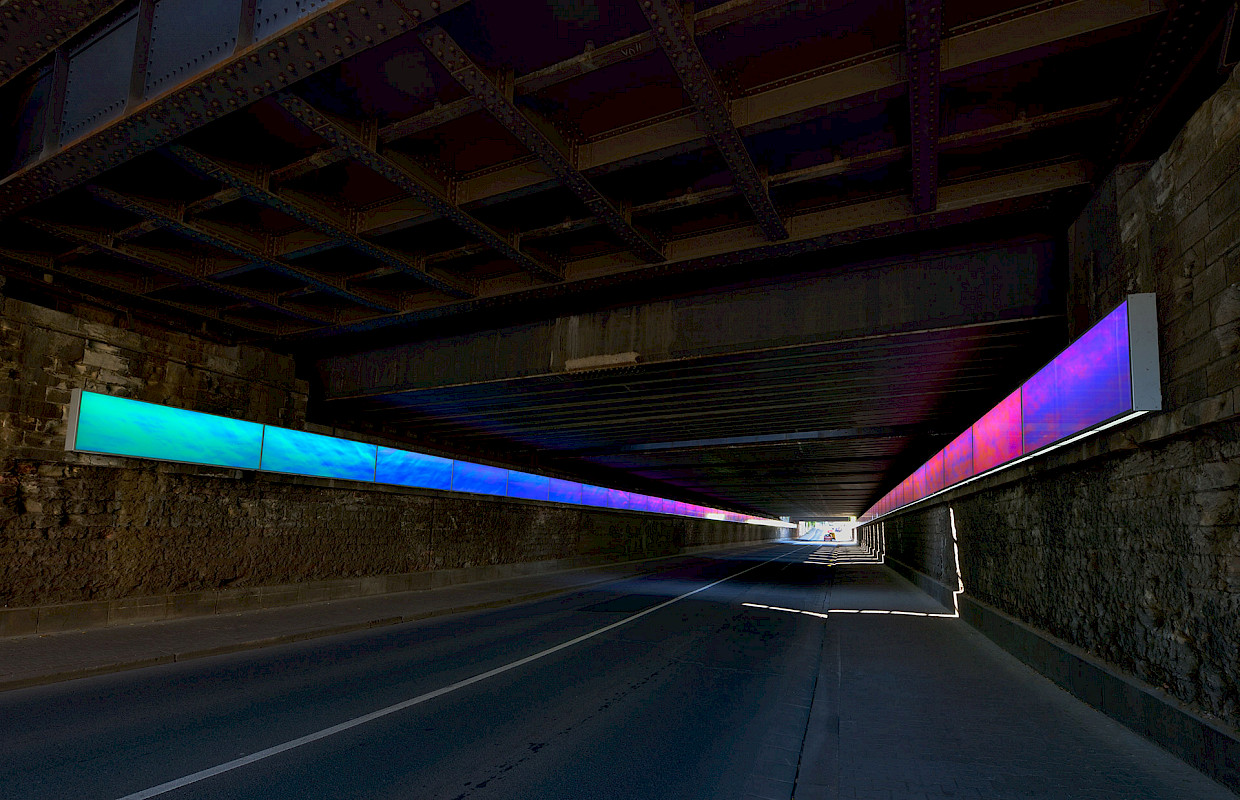
Der rund 120 Meter lange und über 130 Jahre alte Goethetunnel in Mainz verläuft unter dem Gleisfeld des Hauptbahnhofs und verbindet hochfrequentiert die Neustadt mit dem Stadtteil Hartenberg-Münchfeld. Trotz seiner funktionalen Bedeutung galt der Tunnel stadträumlich als Angstraum und „Unort“. Dunkelheit, Unwirtlichkeit und mangelnde Wartung führten dazu, dass der Goethetunnel als Tor zur Mainzer Neustadt nicht mehr angemessen wahrgenommen wurde. Die Stadt Mainz entschied sich daher für eine gezielte architektonische Umgestaltung.
Konzept
Die Umgestaltung des Goethetunnels sollte nicht durch rein kosmetische Maßnahmen wie Anstrich oder konventionelle Beleuchtung erfolgen, da diese weder nachhaltig noch vandalismussicher gewesen wären. Stattdessen bündelten SCHOYERER ARCHITEKTEN_SYRA die Parameter Licht, Farbe und Gestaltung in einem durchgängigen, kastenartigen Band als integrale Maßnahme. Zum Einsatz kamen industrielle Massenprodukte wie energieeffiziente LED-Technik und moderne Radiant-Folientechnik, die zum Planungszeitpunkt wirtschaftlich verfügbar waren. Ziel war eine dauerhafte, robuste und zugleich identitätsstiftende Lösung für den innerstädtischen Infrastrukturbau.
Architektur Beschreibung
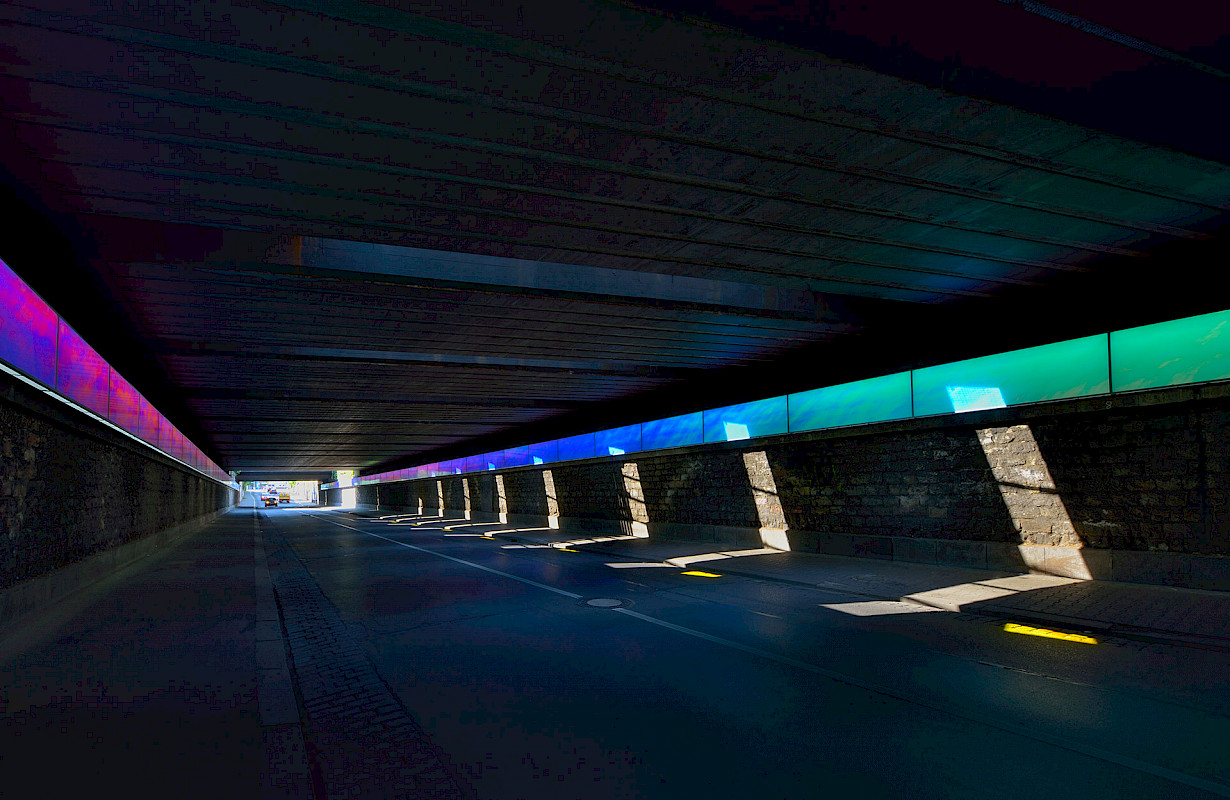
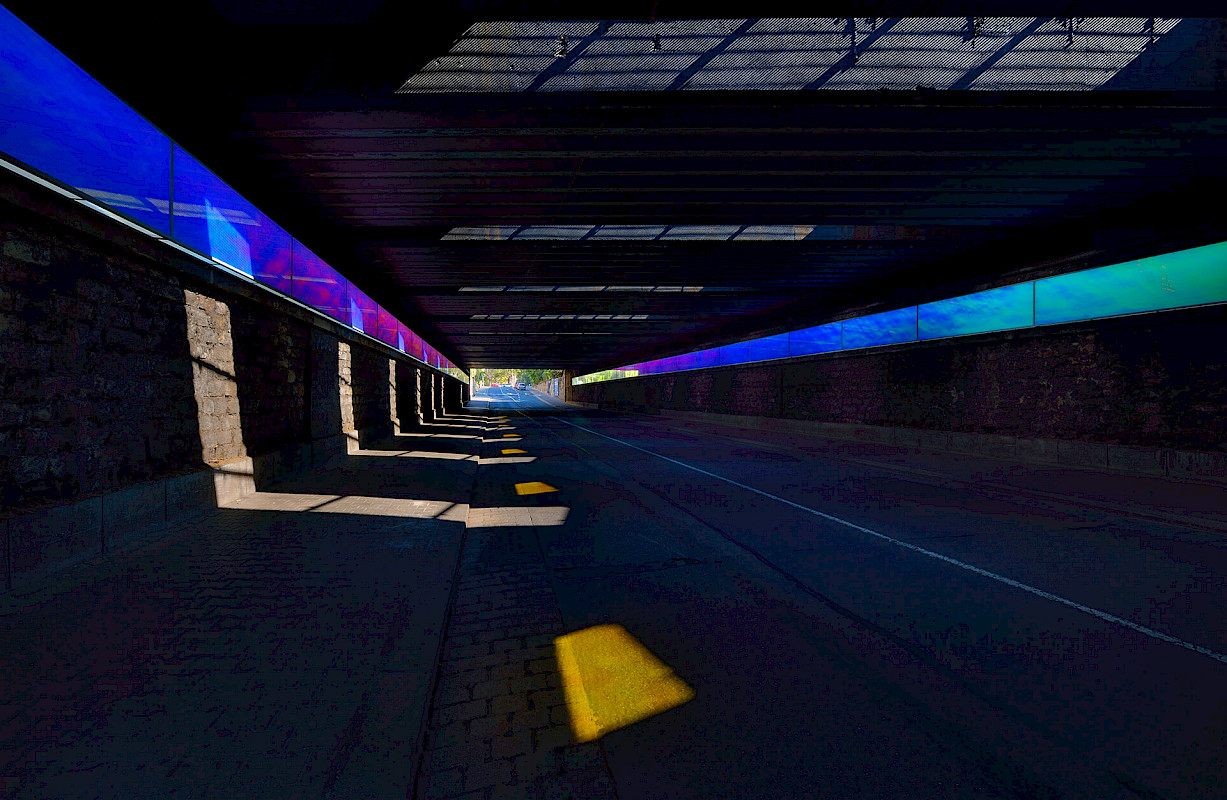
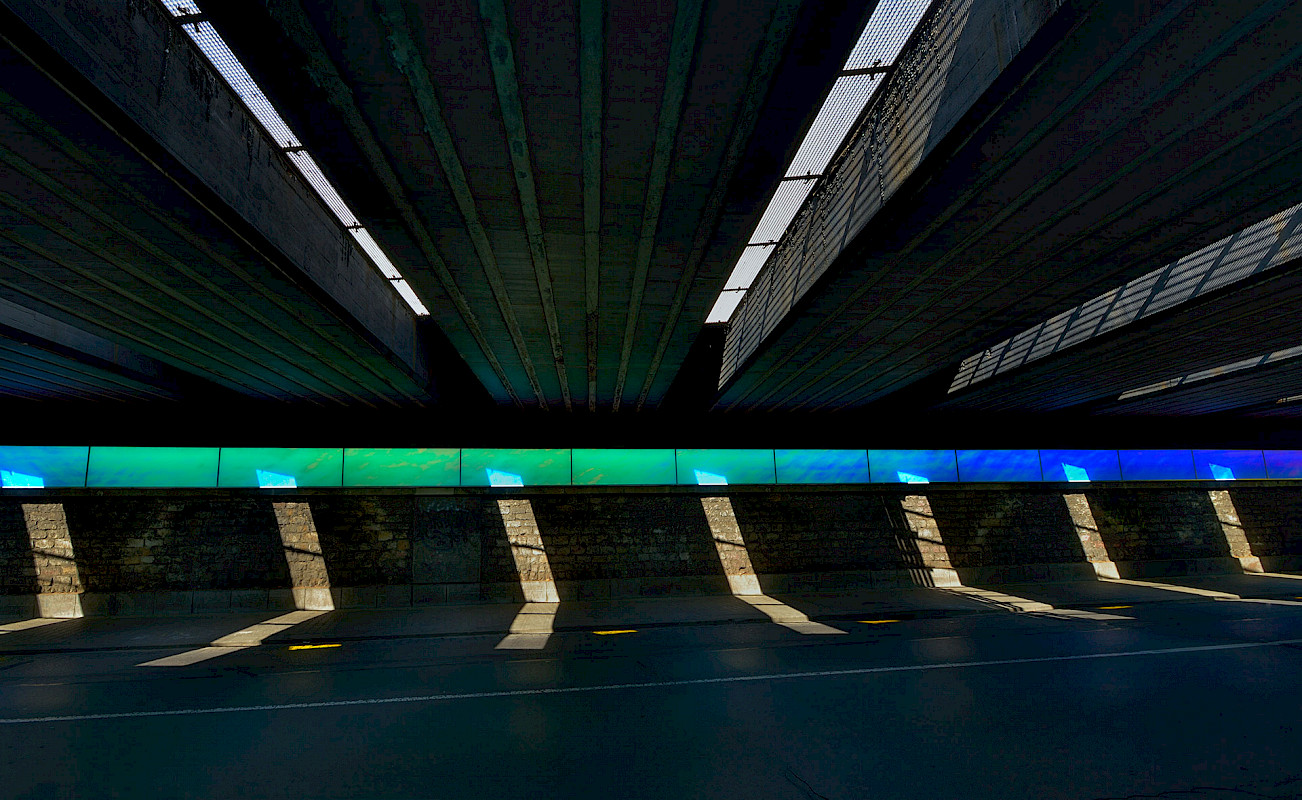
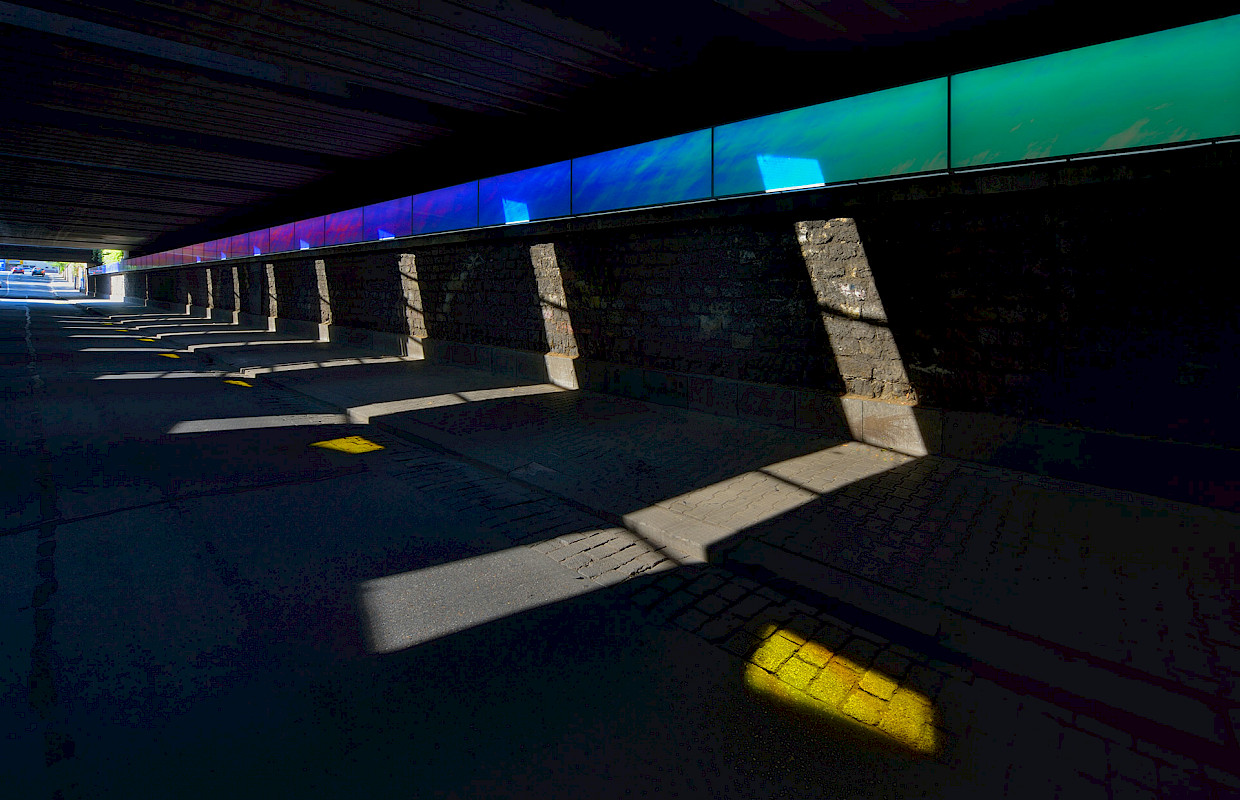
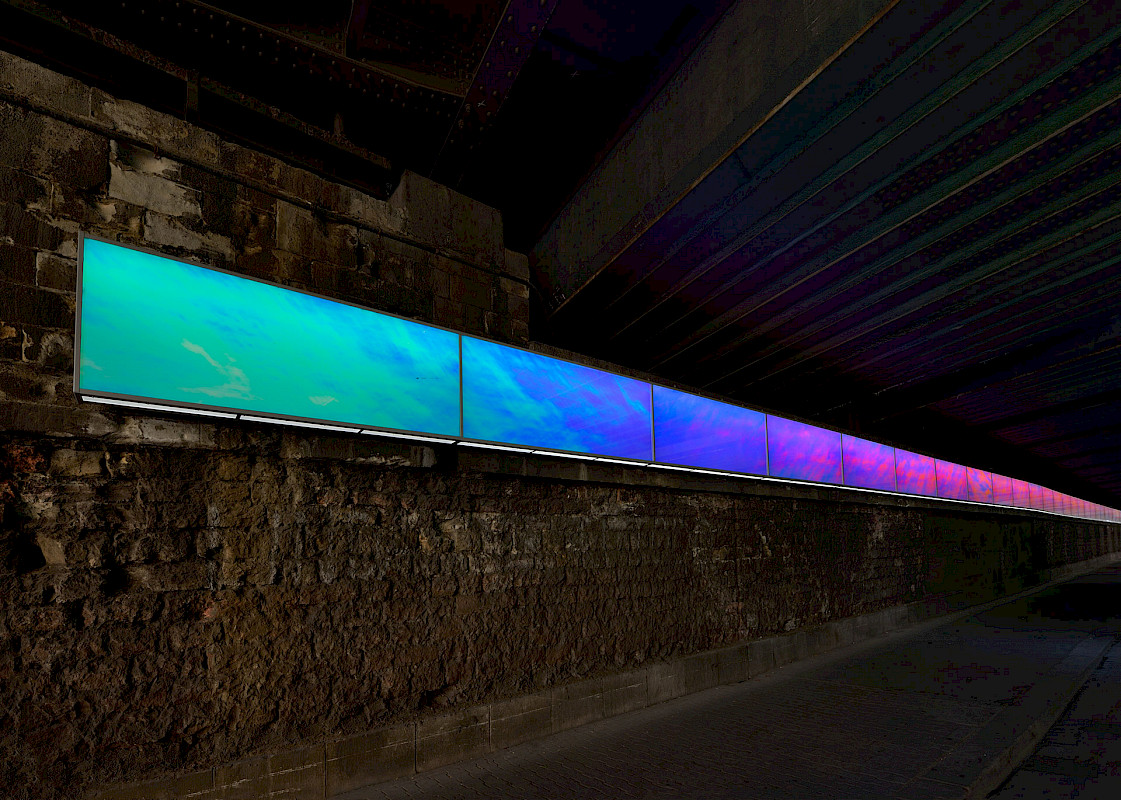
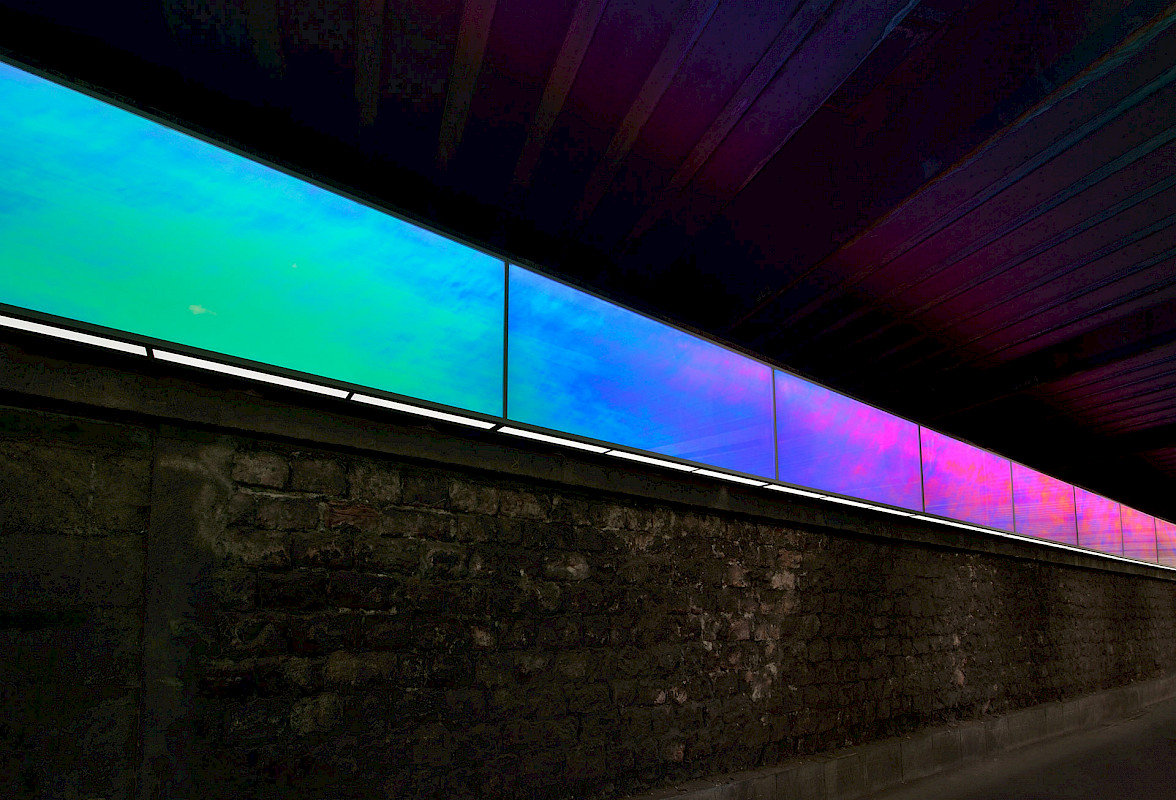
Das lineare Lichtband durchzieht den gesamten Mainzer Goethetunnel und erzeugt ein changierendes Farb- und Lichtspiel. Die LED-Technik gewährleistet bei geringem Energieverbrauch eine gleichmäßige Ausleuchtung, während die Radiant-Folie das Licht je nach Standort und Bewegung des Betrachters in Regenbogenfarben streut. Dadurch entsteht ein interaktiver Raumeindruck mit wechselnden Stimmungen. Die historischen Tunnelwände bleiben in Oberfläche und Struktur unverändert. Ihr archaischer, über 130 Jahre alter Charakter bildet einen bewussten Kontrast zur zeitgenössischen Lichtinstallation. Die Überlagerung von Bestand und moderner Technik verleiht dem Infrastrukturbau eine neue stadträumliche Qualität.
Konstruktion
Das Beleuchtungssystem ist als robustes, wartungsarmes Element konzipiert. Die Kombination aus LED-Technik und spezieller Folientechnologie reduziert Energieverbrauch und Unterhaltskosten. Durch die additive Installation bleibt die historische Bausubstanz unangetastet. Die Maßnahme transformiert den Tunnel nachhaltig vom Angstraum zur identitätsstiftenden Verbindung zwischen Hauptbahnhof, Neustadt und Hartenberg-Münchfeld.
Existing Conditions
The approximately 120-meter-long Goethe Tunnel in Mainz, more than 130 years old, runs beneath the tracks of the main railway station and serves as a highly frequented connection between the Neustadt district and Hartenberg-Münchfeld. Despite its functional importance, the tunnel had come to be perceived as an urban “non-place” and an area of insecurity. Darkness, neglect, and a lack of maintenance meant that the Goethe Tunnel was no longer recognized as an appropriate gateway to Mainz Neustadt. In response, the City of Mainz commissioned a targeted architectural transformation.
Concept
The redesign of the Goethe Tunnel deliberately avoided purely cosmetic measures such as repainting or conventional lighting, which would have been neither sustainable nor vandalism-resistant. Instead, SCHOYERER ARCHITEKTEN_SYRA consolidated the parameters of light, color, and form into a continuous, box-like band conceived as an integral intervention. The design employs industrial mass-produced components — including energy-efficient LED technology and contemporary radiant film technology — both economically viable at the time of planning. The objective was to create a durable, robust, and identity-forming solution for inner-city infrastructure.
Architectural Design
The linear light band extends throughout the entire length of the tunnel, generating a shifting interplay of color and illumination. LED technology ensures uniform lighting with low energy consumption, while the radiant film refracts the light into iridescent, rainbow-like tones depending on the viewer’s position and movement. The result is an interactive spatial experience with continuously changing atmospheres. The historic tunnel walls remain untouched in both surface and texture. Their archaic character, shaped over more than 130 years, forms a deliberate contrast to the contemporary light installation. The superimposition of historic fabric and modern technology imbues the infrastructure with a new urban presence and spatial quality.
Construction
The lighting system is conceived as a robust, low-maintenance element. The combination of LED technology and specialized film significantly reduces energy consumption and operational costs. As an additive installation, the intervention leaves the historic structure intact. The measure sustainably transforms the tunnel from a perceived space of insecurity into an identity-defining urban link between the main station, Neustadt, and Hartenberg-Münchfeld.
Publikationen
| 2017 | Best Of Mainz - 111 Orte in Mainz, die man gesehen haben muss | BEST-OF-MAINZ.COM | |
| 2014 | Garten + Landschaft - LED sanierter Tunnel | Artikel | GARTEN-LANDSCHAFT.DE |
| 2013 | BAUNETZ - Aufmacher am 18.01.2013 | Artikel | |
| 2013 | Baukultur Verkehr: Orte / Prozesse / Strategien | Bundesstiftung Baukultur | Artikel | AMAZON.DE |
| 2012 | Baunetzwissen - Elektro Goethetunnel Mainz | Artikel | BAUNETZWISSEN.DE |
| 2012 | Mainzer Neustadt-Anzeiger, März 2012 | Artikel | YUMPU.COM |
| 2012 | BAUNETZ - Einladung statt Unort vom 03.12.2012 Einladung statt Unort | Artikel | BAUNETZ.DE |